


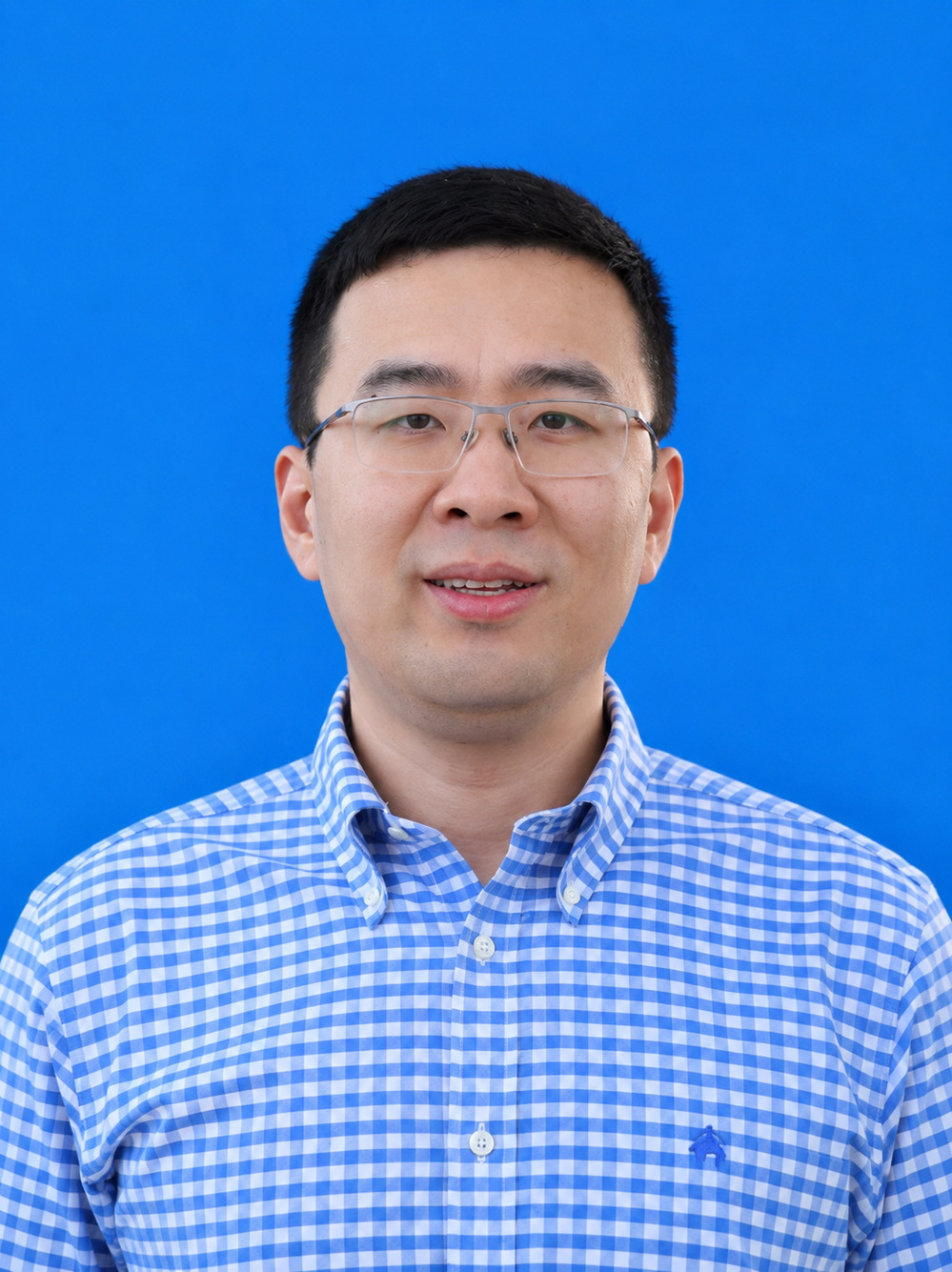
Dr. Wang Congzhou
Distinguished Professor
E-mail: czwang12@suda.edu.cn
Biography
Congzhou Wang joined ICPI at Soochow University in June 2026 as a full professor. He obtained his bachelor's degree in Pharmaceutical Engineering from Huaqiao University in 2009, master's degree in Pharmacy from Chongqing University in 2012, PhD in Chemical and Life Science Engineering from Virginia Commonwealth University (US) in 2015, and conducted his postdoctoral research in the Department of Materials and Mechanical Engineering at Washington University in St. Louis (US) from 2016 to 2018. From 2018 to 2023, he served as Tenure-track Assistant Professor in the Department of Nanoscience and Biomedical Engineering at South Dakota School of Mines and Technology (US); from 2023 to 2026, he worked as Tenured Associate Professor in the same department of the university.
Wang Congzhou's team has focused on the interaction between nanomaterials and cells/proteins and its applications in the past five years. As the corresponding author, he has published 16 papers in journals including ACS Nano, Biomaterials, Chemical Engineering Journal and Nano Letters in the past five years; he has applied for 4 international/US patents, 2 of which have been authorized; he has cooperated with 5 institutions and enterprises including NASA to promote disease diagnosis and treatment based on nanobiotechnology. As an independent principal investigator, he has obtained a total of 1.5 million US dollars in research funding, covering projects such as the NSF CAREER Award (from the US National Science Foundation) and NIH R15 from the US National Institutes of Health; he has been invited to serve as a fund reviewer for the US National Institutes of Health for many consecutive years.
Research Interests
Nano-biomechanics, Nanotoxicology, Cell phenotype transition;
Cancer metastasis and chemoresistance;
Atherosclerosis;
Organ fibrosis;
Atomic force microscopy;
Protein preservation.
Select Publications(* indicates corresponding author):
After starting independent career:
1. X. Yu, S. Smith, C. Wang*, “Reversing fibroblast-to-myofibroblast transition using surface-engineered nanoparticles to potentially ameliorate fibrotic diseases”, Biomaterials, 2026, 328, 123829.
2. X. Luo, X. Yu, V. Kee, S. Smith, C. Wang*, “Inhibiting migration of endothelial-derived mesenchymal cells using a nanoparticle-based photothermal treatment impedes atherosclerosis and cancer progression”, ACS Applied Materials and Interfaces, 2026, 18, 7938-7949.
3. X. Yu, K. Ballard, C. Collier, X, Wei, S. Ning*, C. Wang*, “Targeting and disrupting cytoskeleton using core-shell metal-organic framework nanoparticles to inhibit cancer cell migration”, Journal of Colloid and Interface Science, 2026, 704, 139298.
4. J. Liu, X. Yu, X. Luo, Z. Yang, N Zhang, S. Ning*, C. Wang*, “Nanoparticle and photothermal mediated mesenchymal-epithelial transition in cancer cells to slow cancer cell migration”, Chemical Engineering Journal, 2025, 164286.
5. J. Liu, S. Smith, C. Wang*, “Mild photothermal therapy for cancer cell modulation: A transformative approach to regulate cancer cell phenotype and enhance therapeutic outcomes”, Journal of Pharmaceutical Analysis, 2025, 101185.
6. J. Liu, X. Yu, A. Braucht, S. Smith, C. Wang*, “N-cadherin targeted melanin nanoparticles reverse the endothelial-mesenchymal transition in vascular endothelial cells to potentially slow the progression of atherosclerosis and cancer”, ACS Nano, 2024, 8, 8229-8247.
7. X. Yu, J. Liu, A. Bauer, X. Wei, S. Smith, S. Ning*, C. Wang*, “Enhancing tumor endothelial permeability using MUC18-targeted gold nanorods and mild hyperthermia”, Journal of Colloid and Interface Science, 2024, 676, 101-109.
8. J. Liu, S. Smith, C. Wang*, “Photothermal Attenuation of Cancer Cell Stemness, Chemoresistance, and Migration Using CD44-Targeted MoS2 Nanosheets”, Nano Letters, 2023, 23,1989–1999.
9. Z. Li, J. Liu, K. Ballard, C. Liang*, C. Wang*, “Low-dose albumin-coated gold nanorods induce intercellular gaps on vascular endothelium by causing the contraction of cytoskeletal actin”, Journal of Colloid and Interface Science, 2023, 649, 844-854.
10. J. Liu, A. Rickel, S. Smith, Z. Hong*, C. Wang*, “Non-cytotoxic doses of metal-organic framework nanoparticles increase endothelial permeability by inducing actin reorganization”, Journal of Colloid and Interface Science, 2023, 634, 325-335.
11. J. Liu, S. Smith, C. Wang*, “Reversing the epithelial-mesenchymal transition in metastatic cancer cells using CD146-targeted black phosphorus nanosheets and a mild photothermal treatment”, ACS Nano, 2022, 16, 3208–3220.
12. J. Liu, L. Kang, S. Smith, C. Wang*, “Transmembrane MUC18 targeted polydopamine nanoparticles and a mild photothermal effect synergistically disrupt actin cytoskeleton and migration of cancer cells”, Nano Letters, 2021, 21, 9609–9618.
13. D. Kota, L. Kang, A. Rickel, J. Liu, S. Smith, Z. Hong*, C. Wang*, "Low doses of zeolitic imidazolate framework-8 nanoparticles alter the actin organization and contractility of vascular smooth muscle cells," Journal of Hazardous Materials, 2021, 414, 125514.
14. J. Liu, L. Kang, P. Ahrenkiel, S. Smith, C. Wang*, “Targeting cancer cell adhesion molecule, CD146, with low-dose gold nanorods and mild hyperthermia disrupts actin cytoskeleton and cancer cell migration”, Journal of Colloid and Interface Science, 2021, 601, 556-569.
15. L. Kang, S. Smith, C. Wang*, "Stabilization of surface-bound antibodies for ELISA based on a reversable zeolitic imidazolate framework-8 coating," Journal of Colloid and Interface Science, 2021, 588, 101-109.
16. L. Kang, S. Smith, C. Wang*, "Metal-organic framework preserves biorecognition of antibodies on nanoscale surfaces validated by single molecule force spectroscopy," ACS Applied Materials & Interfaces, 2020, 12, 3011-3020.
As a student and postdoc:
1. C Wang, G Sudlow, Z Wang, S Cao, Q Jiang, A Neiner, J Morrissey, E Kharasch, S Achilefu, S Singamaneni*, “Metal organic framework encapsulation preserves the bioactivity of protein therapeutics”, Advanced Healthcare Materials, 2018, 7, 1800950.
2. C Wang, H Sun, J Luan, Q Jiang, S Tadepalli, J Morrissey, E Kharasch, S Singamaneni*, “Metal-organic framework encapsulation for biospecimen preservation”, Chemistry of Materials, 2018, 30, 1291-1300.
3. C Wang, L Wang, S Tadepalli, J Morrissey, E Kharasch, R Naik*, S Singamaneni*, “Ultra-robust biochips with metal-organic framework coatings for point-of-care diagnosis”, ACS Sensors, 2018, 3, 342-351.
4. C Wang, S Tadepalli, J Luan, K Liu, J Morrissey, E Kharasch, R Naik*, S Singamaneni*, “Metal-organic framework as a protective coating for biodiagnostic chips”, Advanced Materials, 2017, 29, 1604433.
5. C Wang, R Hu, J Morrissey, E Kharasch, S Singamaneni*, “Single molecule force spectroscopy to compare natural versus artificial antibody-antigen interaction”, Small, 2017, 13, 1604255.
6. C Wang, C Stanciu, C Ehrhardt, V Yadavalli*, “Nanoscale characterization of forensically relevant epithelial cells and surface associated extracellular DNA”, Forensic Science International, 2017, 277, 252-258.
7. C Wang, J Luan, S Tadepalli, K Liu, J Morrissey, E Kharasch, R Naik*, S Singamaneni*, “Silk-encapsulated plasmonic biochips with enhanced thermal stability”, ACS Applied Materials & Interfaces, 2016, 8, 26493-26500.
8. C Wang, O Zolotarskaya, S Nair, C Ehrhardt, D Ohman, K Wynne, V Yadavalli*, “Real-time observation of antimicrobial polycation effects on Escherichia coli: adapting the carpet model for membrane disruption to quaternary copolyoxetanes”, Langmuir, 2016, 32, 2975-2984.
9. C Wang, C Ehrhardt, V Yadavalli*, “Nanoscale imaging and hydrophobicity mapping of the antimicrobial effect of copper on bacterial surfaces”, Micron, 2016, 88, 16-23.
10. C Wang, C Stanciu, C Ehrhardt, V Yadavalli*, “Evaluation of whole cell fixation methods for the analysis of nanoscale surface features of Yersinia pestis KIM”, Journal of Microscopy, 2016, 263, 260-267.
11. C Wang, C Stanciu, C Ehrhardt, V Yadavalli*, “The effect of growth temperature on the nanoscale biochemical surface properties of Yersinia pestis”, Analytical and Bioanalytical Chemistry, 2016, 408, 5585-5591.
12. C Wang, Y Jin, U Desai, V Yadavalli*, “Investigation of the heparin-thrombin interaction by dynamic force spectroscopy”, Biochimica et Biophysica Acta, 2015, 1850, 1099-1106.
13. C Wang, C Ehrhardt, V Yadavalli*, “Single cell profiling of surface carbohydrates on Bacillus cereus”, Journal of the Royal Society Interface, 2015, 12, 20141109.
14. C Wang, C Stanciu, C Ehrhardt, V Yadavalli*, “Morphological and mechanical imaging of Bacillus cereus spore formation at the nanoscale”, Journal of Microscopy, 2015, 258, 49-58.
15. C Wang, V Yadavalli*, “Spatial recognition and mapping of proteins using DNA aptamers”, Nanotechnology, 2014, 25, 455101.
16. C Wang, V Yadavalli*, “Investigating biomolecular recognition at the cell surface using atomic force microscopy”, Micron, 2014, 60, 5-17.
17. C Wang, J Wang*, L Deng, “Evaluating interaction forces between BSA and rabbit anti-BSA in sulphathiazole sodium, tylosin and levofloxacin solution by AFM”, Nanoscale Research Letters, 2011, 6,579.
